

MyFutureFund vs a Private Pension in Ireland: What's the Difference?

Ireland's new pension auto-enrolment scheme, MyFutureFund, officially began on 1 January 2026. It's designed to help employees who aren't already contributing to a qualifying workplace pension start saving for retirement.
But how does MyFutureFund compare with a private pension? And if you're already paying into a pension, what does the new scheme mean for you?
Understanding the differences can help you make more informed decisions about your retirement savings.
What Is MyFutureFund?
MyFutureFund is a State-sponsored retirement savings scheme that automatically enrols eligible employees who don't have qualifying pension coverage through their employment.
Generally, employees are automatically enrolled if they:
Are aged between 23 and 60.
Earn €20,000 or more annually, based on qualifying payroll earnings.
Are not already covered by a qualifying pension arrangement through their employment.
Eligible employees contribute a percentage of their gross earnings, which is matched by their employer and supplemented by the State.
How Much Goes Into MyFutureFund?
For 2026, contributions are set at:
Employee: 1.5% of gross earnings
Employer: 1.5% of gross earnings
State: 0.5% of gross earnings
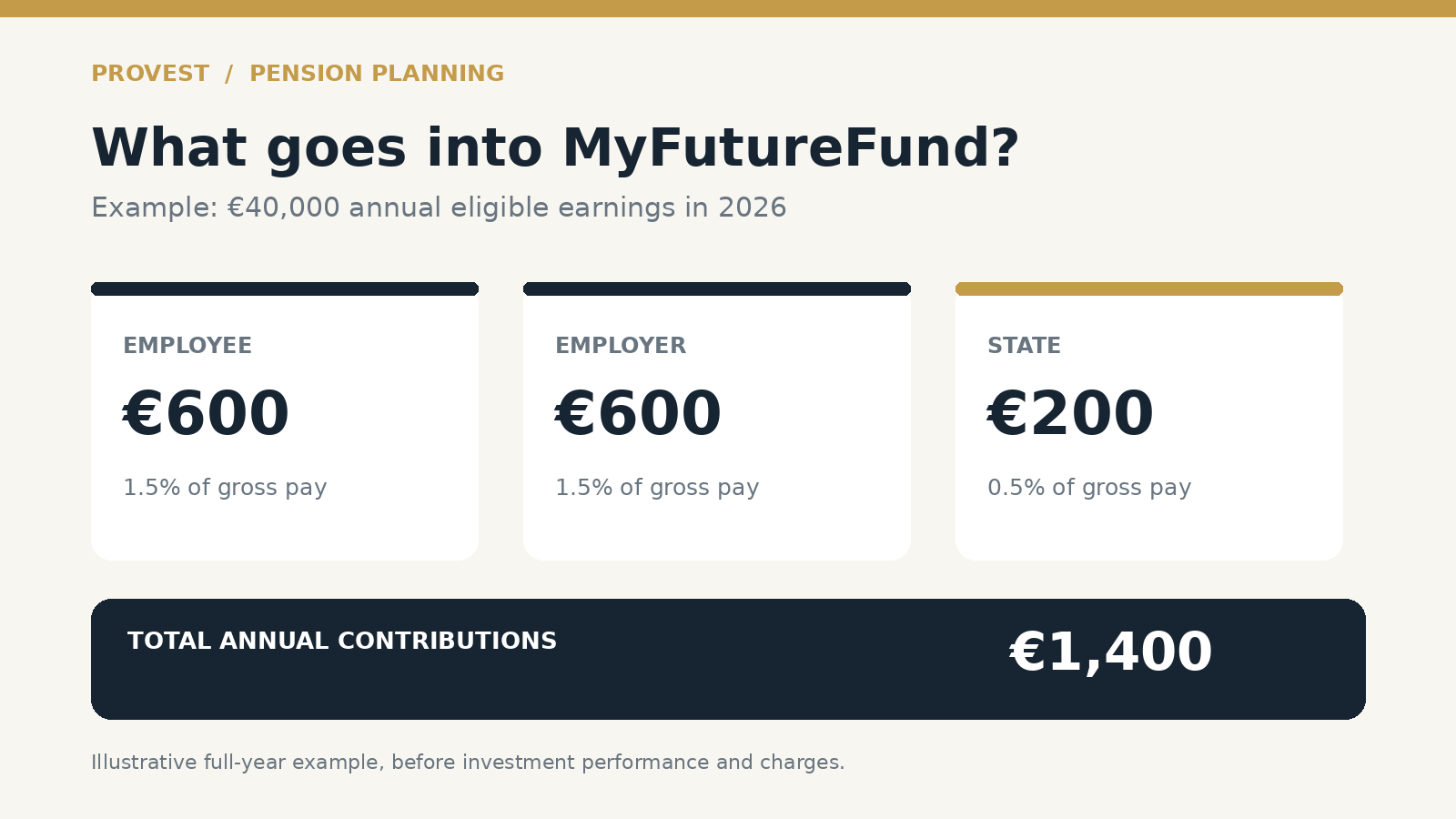
For example, an employee earning €40,000 annually would contribute €600 over a full year. Their employer would contribute another €600, while the State would add €200.
That's a total of €1,400 towards retirement savings annually, before investment returns and charges.
Contributions are calculated on eligible earnings up to an annual cap of €80,000. The contribution rates are scheduled to increase gradually over the coming years.
MyFutureFund vs a Private Pension: Key Differences
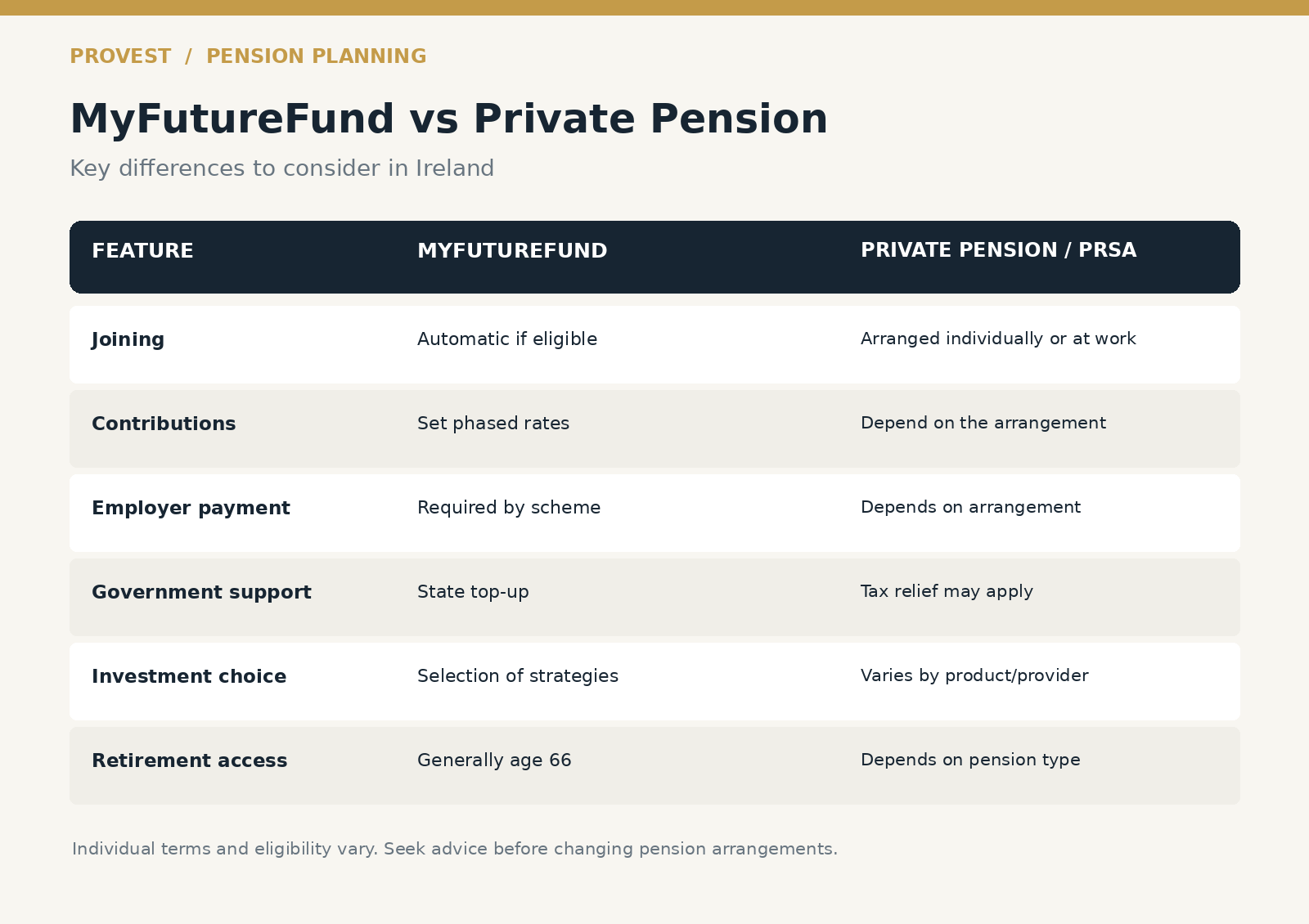
Although both aim to help people build retirement savings, there are important differences to consider.
One particularly important difference is how the Government supports contributions.
Under MyFutureFund, employees receive a State top-up instead of income tax relief on their contributions.
With qualifying private pensions, tax relief may be available on personal contributions, subject to Revenue limits.
The most suitable arrangement will depend on factors including your income, tax position, employer contributions, investment preferences and retirement goals.
What If You Already Have a Pension?
Having an existing pension doesn't necessarily mean you need to make any changes.
Employees contributing to a qualifying workplace pension through payroll may be exempt from MyFutureFund for that employment.
However, the exemption rules depend on the type of pension arrangement and whether it meets the required standards.
For example, from January 2026, defined contribution occupational pensions and PRSA arrangements must generally meet minimum contribution requirements to qualify for an exemption.
If you're unsure how your existing pension is affected, it's worth reviewing the arrangement before making changes.
Can You Opt Out of MyFutureFund?
Yes. Although eligible employees are enrolled automatically, participation isn't compulsory indefinitely.
Employees generally remain in the scheme for an initial six-month period. They can then opt out during months seven and eight, or choose to suspend contributions after the initial six months.
If you opt out during the permitted window, your own eligible contributions are refunded. Employer and State contributions already made remain invested in your retirement fund.
Eligible employees who opt out may be automatically re-enrolled after two years.
Before opting out, consider the potential impact of losing future employer and State contributions.
Which Pension Option Is Right for You?
MyFutureFund provides a way for eligible employees to begin building retirement savings with contributions from their employer and the State.
However, an existing workplace pension or private pension may offer different contribution arrangements, tax benefits, investment choices and retirement options.
Rather than looking at contribution rates alone, it's important to consider your wider financial circumstances.
Questions worth asking include:
How much am I currently saving towards retirement?
Does my employer contribute to my existing pension?
Am I receiving the tax relief available to me?
What investment options and charges apply?
Am I on track to achieve my retirement goals?
Reviewing Your Retirement Plans
Whether you've recently joined MyFutureFund or already have a private pension, understanding how your retirement savings are structured is an important part of financial planning.
At Provest, we help individuals review their pension arrangements, understand their options and plan for their financial future.
Contact our team to discuss your retirement planning needs.